
The Goal
Helping chefs at different skill levels discover, learn, and track professional cooking skills through a clear, guided dashboard experience.
Created a learning dashboard for chefs to improve their skills within 3 days.





ChefPro is a concept learning dashboard for professional chefs, combining mentor discovery, technique lessons and progress tracking in one place. The product was designed end to end in three days, from research and personas through information architecture, user flows and the final interface.
ChefPro began as a three-day concept sprint. Before moving into design, I defined the core challenge and identified the two chef audiences the product needed to support.
Helping chefs at different skill levels discover, learn, and track professional cooking skills through a clear, guided dashboard experience.
These proto personas were based on desk research and early assumptions about culinary students and working chefs. They helped guide the three day concept sprint.
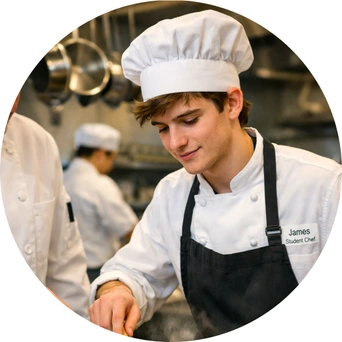
Culinary Student
London
22 years old
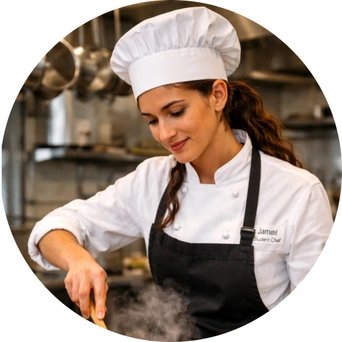
Sous Chef
Barcelona
29 years old
The main research question was:
“How can the product help chefs discover relevant learning content, understand what to learn next, and track their professional development in one place?”
The process included lightweight desk research, competitor analysis, feature prioritization and exploration of existing culinary learning platforms.
The research focused on understanding how chefs improve their professional skills, what makes learning difficult, and how ChefPro could make the process more focused and easier to continue.
| Competitor | Main Strength | Opportunity for ChefPro |
|---|---|---|
| ChefSteps | Strong focus on cooking techniques, detailed recipes, and educational culinary content. | Connect learning content more directly to personal goals, mentor discovery, and skill progression. |
| Scoolinary | Structured culinary courses taught by professional chefs across multiple specialties. | Create a more personalized dashboard experience that combines chefs, learning content, events, and progress. |
| Serious Eats | Large collection of recipes, techniques, and educational food content. | Provide a more structured professional-development experience instead of mainly supporting content discovery and reference. |
A platform that helps chefs discover mentors, techniques, and recipes in one place, with personalized guidance for both beginners and advanced users.
An interactive system that combines learning and analytics, allowing users to start lessons, track progress, and improve consistently.
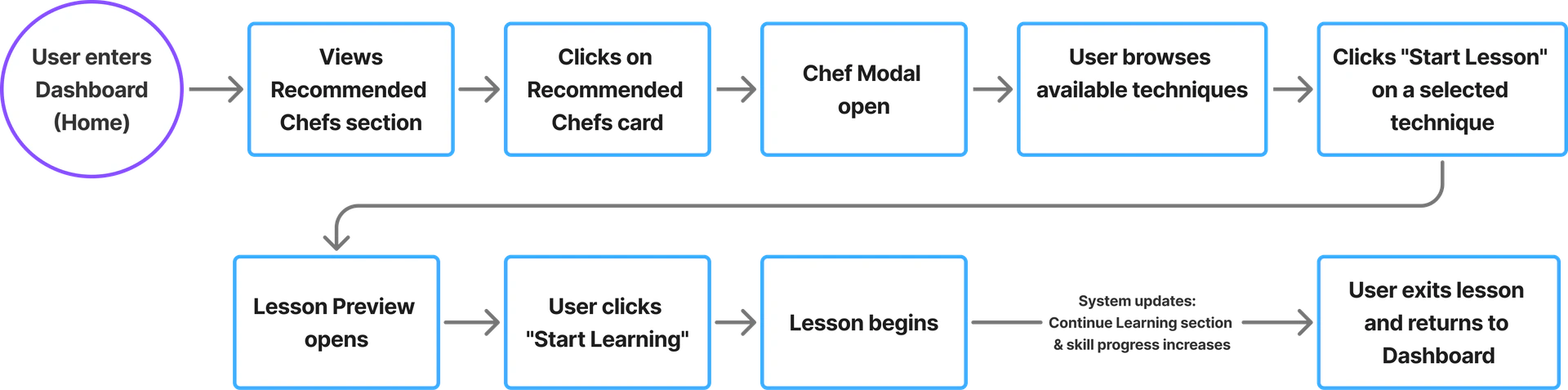
The prioritised features were mapped into a site structure, then walked through as one scenario: a chef arriving with a goal and leaving with a lesson.
Nothing sequenced the journey, and top tier expertise felt out of reach.
Learning had no memory and no measure, so motivation had nothing to hold onto.
Browsing didn't adapt to skill level, and there was no way to narrow the library.
There was no central place to keep content, and no trail back to what was already seen.
Nothing connected the lessons to real kitchens or the chefs teaching them.
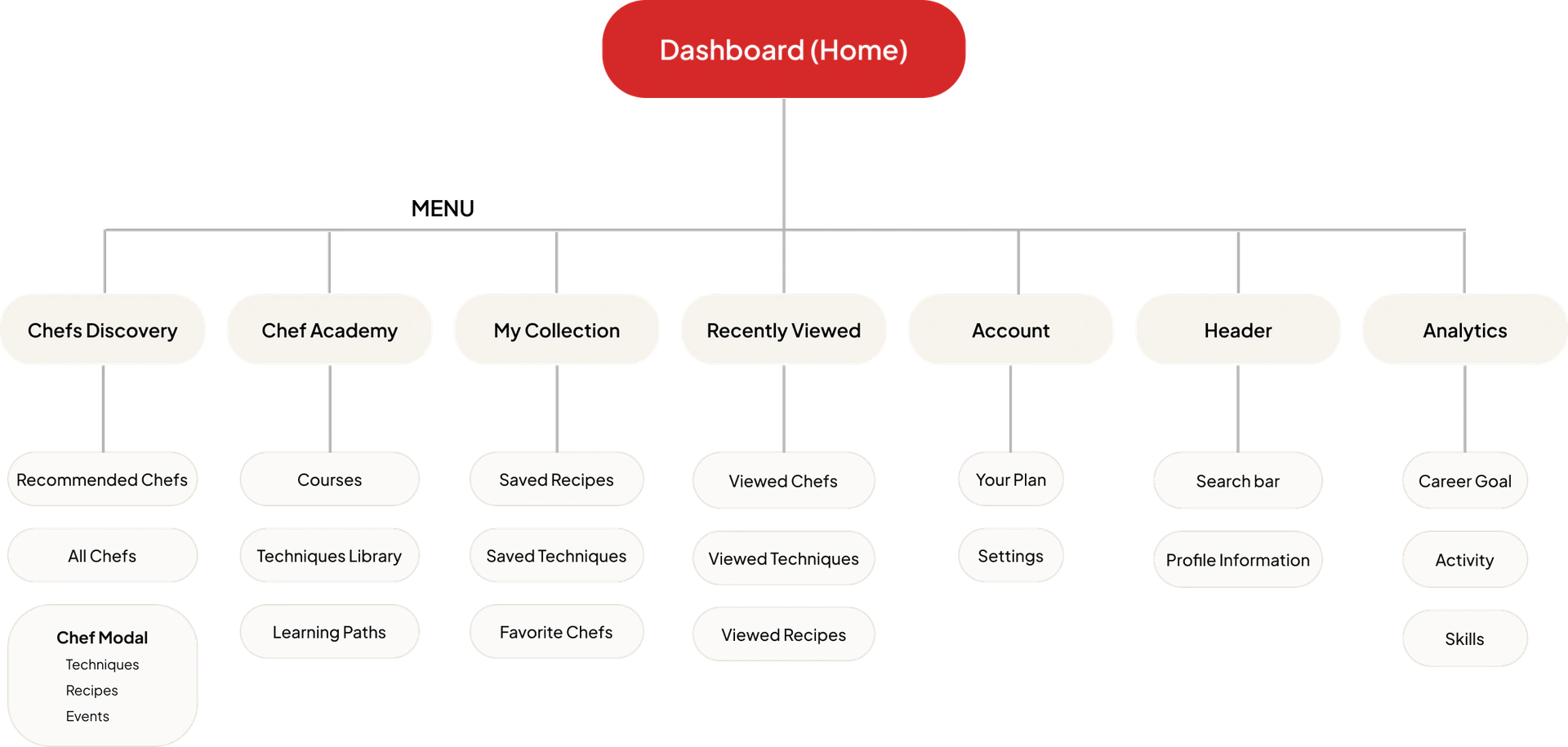
I chose this scenario to highlight a key moment where a chef enters the platform with a desire to improve but lacks clear direction.

From mid fidelity wireframes through the color and type system to the final high fidelity interface.
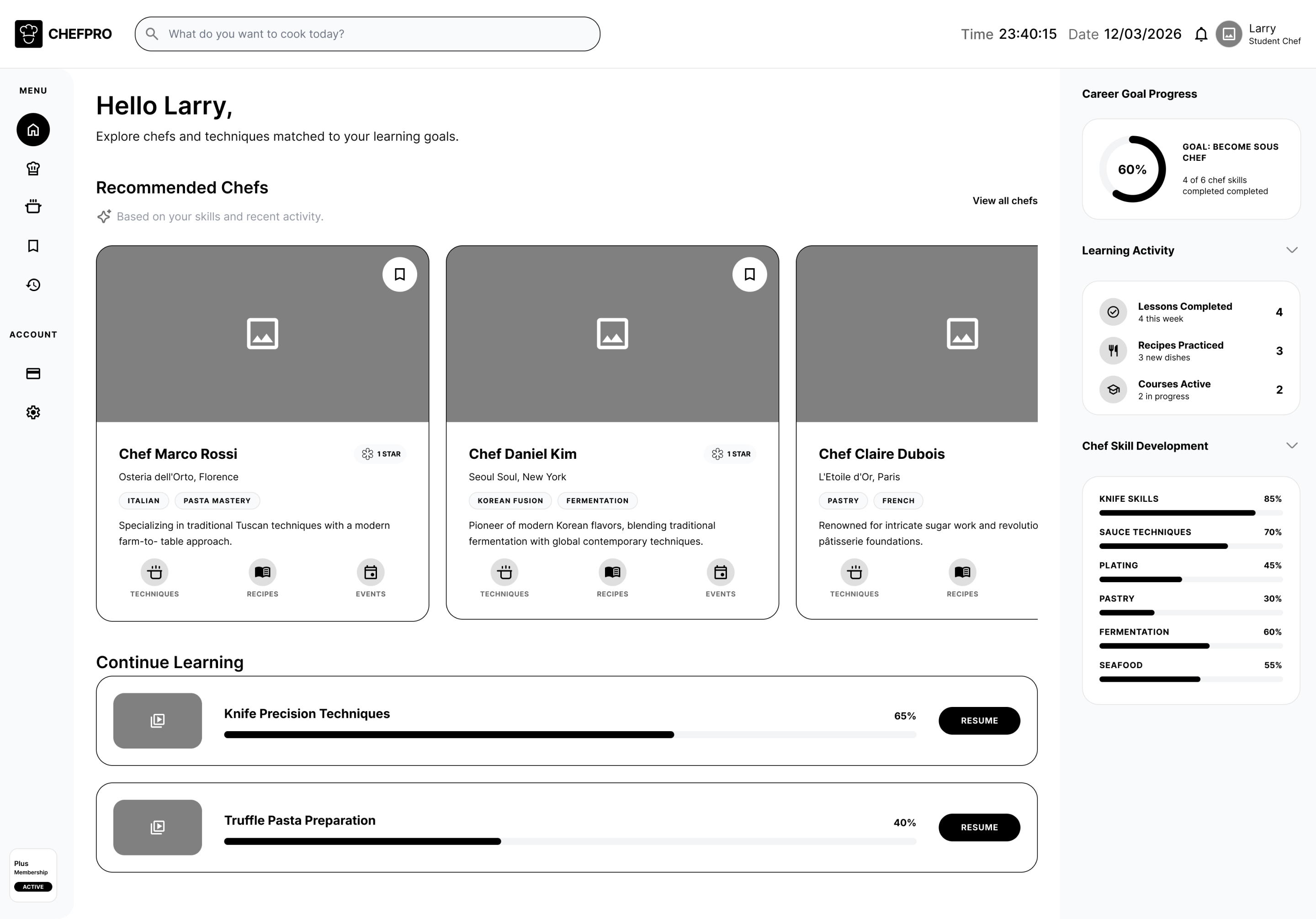
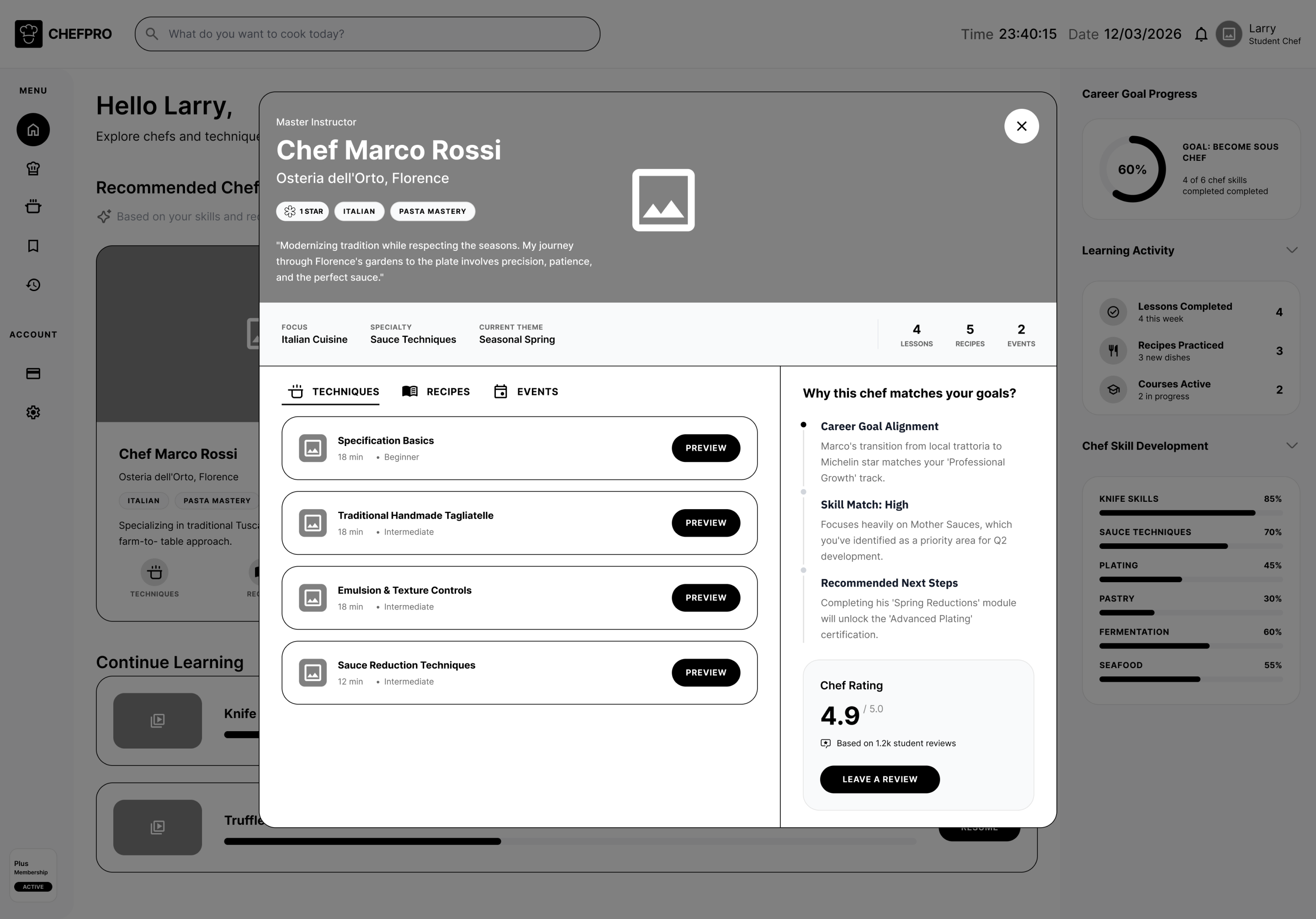
Red = passion, appetite, action | Cream = calm, clean, culinary base | Green = progress, growth, success
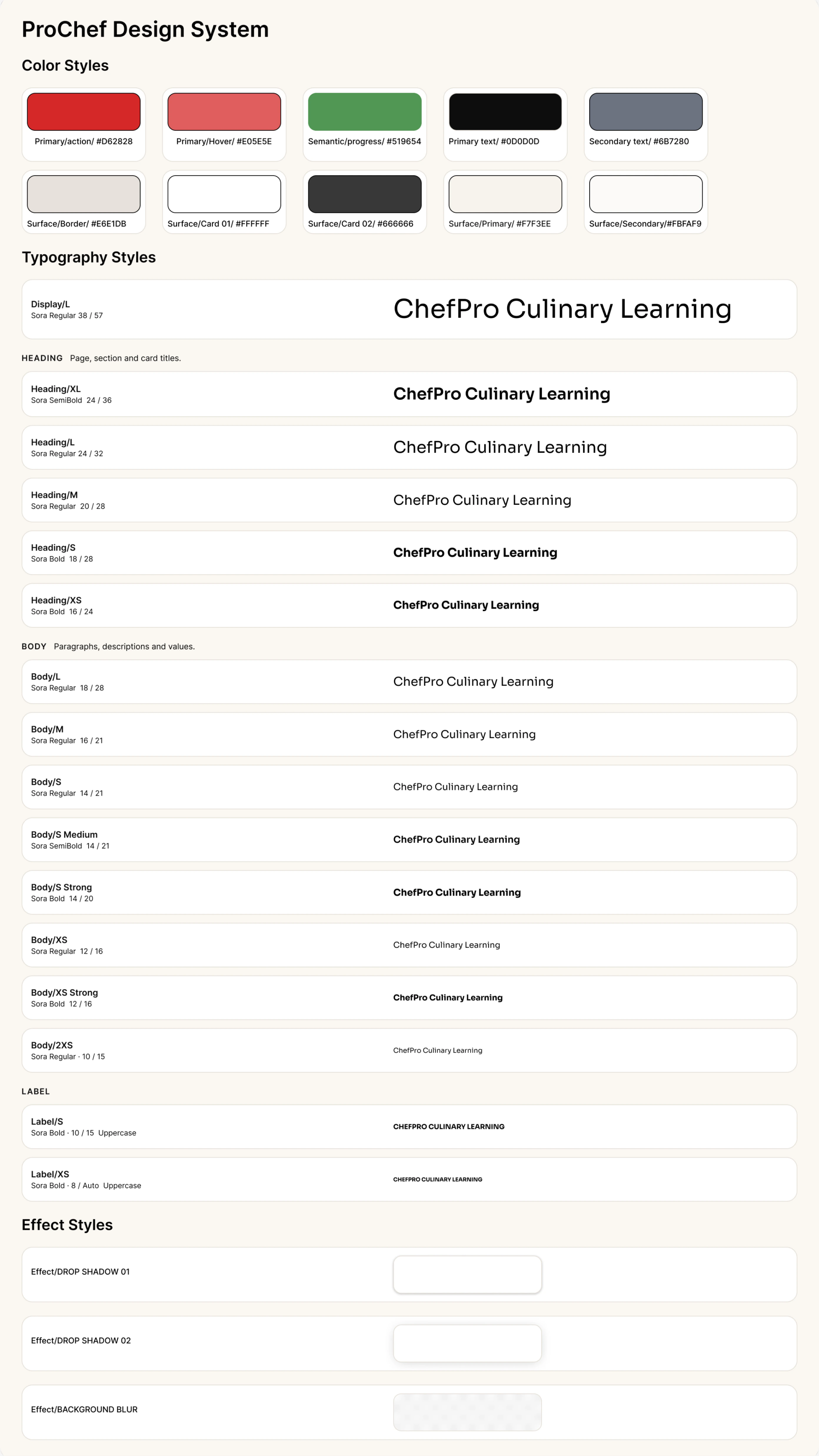
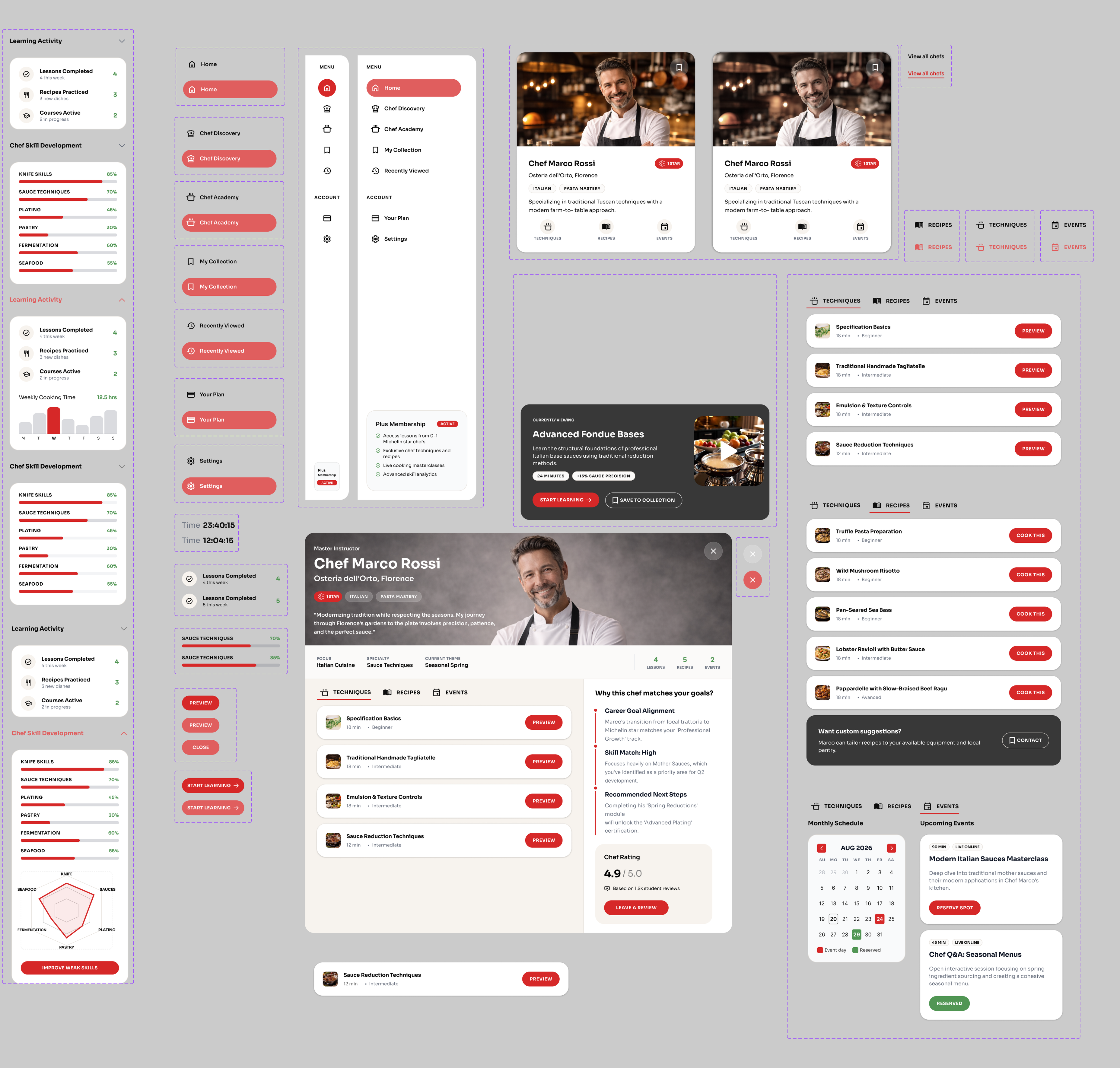
The biggest challenge was balancing a professional system with a focused 3 day scope. I chose to prioritize one strong learning loop instead of expanding the product with many secondary features.
Connected finding a chef, opening their profile, choosing a technique, and starting a lesson into one clear dashboard journey.
Test whether recommendations, progress analytics, and navigation are clear to beginners and experienced chefs.
Test whether users can find a relevant chef, start or resume a lesson, save a recipe, and understand their current progress.
Use testing findings to clarify recommendations and progress analytics, then remove unnecessary complexity from the chef profile modal.